


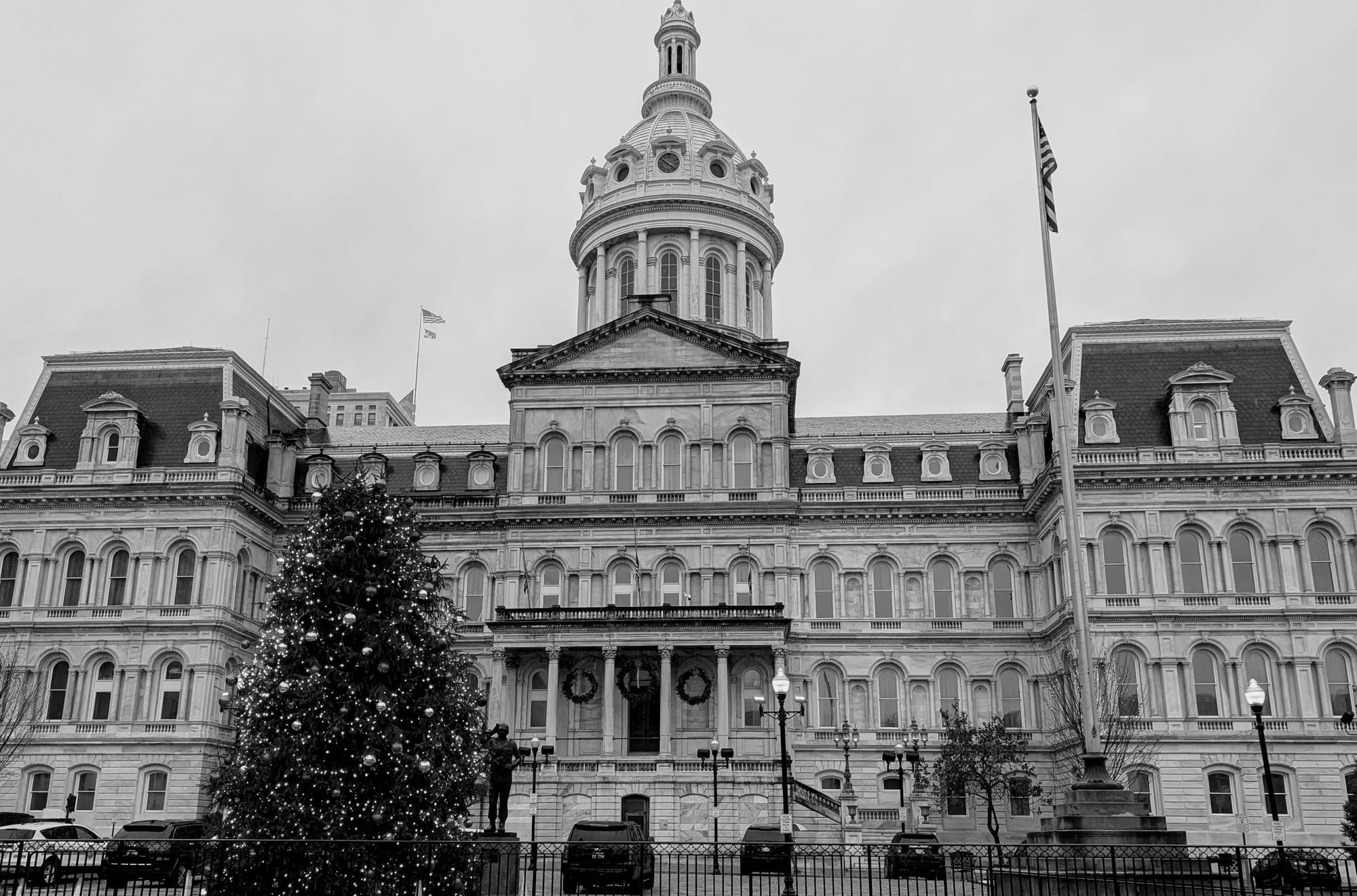
Christmas is almost here, and my only wish is for drug policy reform. Well, there are actually quite a few things — but they are all related to advancing the harm reduction movement and fighting for human rights in Baltimore.
From overdose prevention centers to simply a semblance of compassion from public officials, harm reductionists have a lot to ask for. Unfortunately, all these things require political will from our status quo-loving elected officials, so these may be some unrealistic requests. It is, however, the season of giving. And I'm kindly demanding that they hand over the goods. Or else.
Here's my Christmas list as a Baltimore harm reductionist:
Overdose prevention centers (local level)
Harm reduction advocates recently announced that legislation to legalize OPCs will not be introduced this upcoming legislative session in Annapolis. Given that it's an election year and disgraced Sen. Bill Ferguson will once again preside over the Senate, there's a slim chance that a statewide push for OPCs would materialize. Even in more normal times, the life-saving bills have repeatedly died in committee in previous sessions.
In light of this, it is left up to Mayor Brandon Scott to unilaterally permit sites to open in Baltimore. It's been done in New York City, and it can be done here. However, the mayor has balked at supporting city-sanctioned sites, and Health Commissioner Dr. Michelle Taylor has stated the city would not pursue city-sanctioned facilities as long as President Donald Trump is in office. As it now stands, proposals to allow individuals to use drugs under medical supervision — which has been proven to prevent fatal overdoses — are dead in the water.
The cowardice demonstrated by local officials in the face of a fascist is both disappointing and disgusting. These are not the times to bend the knee, and city leaders must act fast to save the lives of people who use drugs in Baltimore.
Paraphernalia decriminalization (state level)
Like OPC legislation, bills to decriminalize paraphernalia in Maryland have failed in the past. But their journey has been different in one key way — it cleared both chambers in 2021 before being vetoed by former Gov. Larry Hogan. Advocates have noted that there was sufficient support to override it, but the matter never came to a vote because of Ferguson. They still plan to introduce it this legislative session.
Paraphernalia decriminalization would allow people to utilize syringe service programs without fear that they could be arrested for possessing the supplies they receive, and history has shown us that there's a path toward successful passage. This is legislation that's needed to ensure that drug users can access much-needed harm reduction services, and it's also a step in the right direction in the fight against the lethal War on Drugs.
State legislators, especially those in leadership, must place stigma aside and do what's right to save lives.
The return of de facto decriminalization and the end of Ivan Bates' political career (local level)
De facto decriminalization of low-level crimes such as drug possession was something that Baltimore has already experimented with. Former Mayor Kurt Schmoke first came out in support of complete drug decriminalization in 1988 as part of an unsuccessful attempt to combat the War on Drugs, and
Former State's Attorney Marilyn Mosby then made waves after implementing de facto decriminalization in 2020 — a move lauded by public health advocates but reversed by Ivan Bates just a few years later. From the outset, Bates' time in office has been a paragon of Baltimore's reckless disregard for public health and human rights under the guise of "public safety."
The Baltimore Police Department's racist drug enforcement, particularly in low-income Black neighborhoods, has been emboldened during Bates' tenure. In addition to the failed citation docket and embarrassing spats with other elected officials, that's the record he's bringing to the table as he seeks reelection.
Commonsense drug policy reform must return to Baltimore, and Bates must be disposed of. In 2026, he must be primaried from the left if the city has any chance of fighting the drug war and mass incarceration.
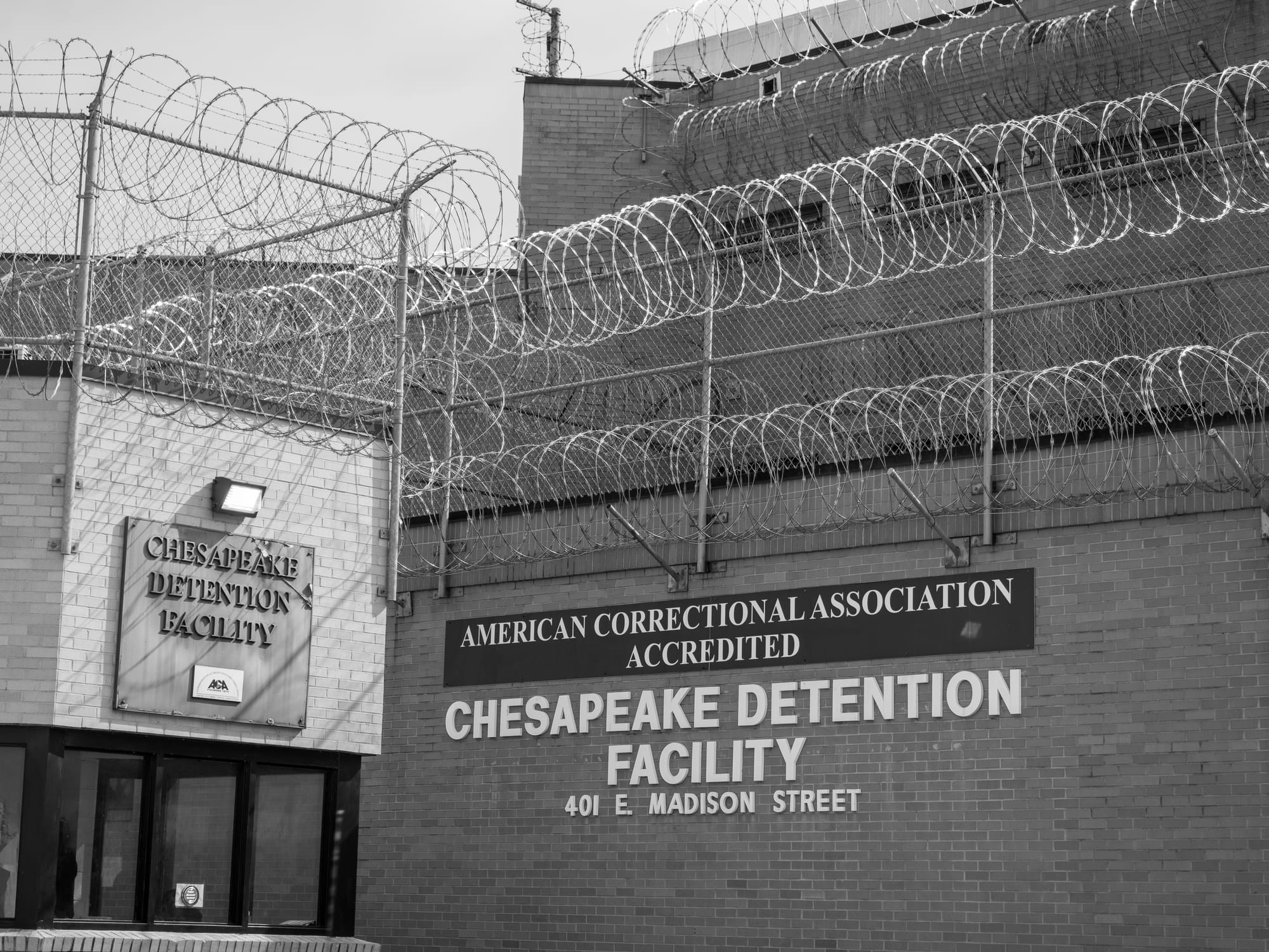
The defunding of the Baltimore Police Department (local level)
In a staggering indictment of policing in Baltimore, a Baltimore Beat analysis of police data in June showed that nearly all people arrested and charged with drug crimes in Baltimore are Black — even though studies show that drug use rates among the Black population are similar to those of other races.
Meanwhile, Bates' policies have caused low-level drug charges to surge, and fatal overdose rates among older Black men have skyrocketed in the last decade. All of this has happened as the cops have continuously seen increases to their already exorbitant budget, in part to crack down harder on drug crimes.
Whether it's the Gun Trace Task Force, the War on Drugs or the killing of people experiencing mental health crises, the BPD has repeatedly shown that it's corrupt to its core. There is no hope for reforming the death squad, leaving only disinvestment — or outright abolition — as the only path forward.
Whether it's taking care of drug users, unhoused individuals or Baltimoreans in general, money is often cited as a reason more can't be done. Yet the cops' $614 million budget demonstrates that there's plenty of money to go around — if the city wants to serve the people rather than place them in jails, prisons or cemeteries.

Increased drug supply testing (state and local level)
Data from the state's Rapid Analysis of Drugs program shows that some counties in Maryland are seeing drug supplies rife with adulterants such as medetomidine. Such drugs have gotten a lot of attention in Baltimore after the Penn North neighborhood experienced three mass overdose events in a span of a few months, even though they're fairly rare in the local drug supply.
At least that's according to the RAD program, which struggles with relatively small sample sizes. In the second quarter of this year, 378 samples were collected from 17 syringe service programs in 12 jurisdictions — and that's not nearly enough. At the state and local level, drug testing efforts must be expanded to better keep up with the ever-changing drug supply.
The contents of the drug supply are a matter of life and death for drug users. The sample sizes should be in the thousands, not hundreds.
In addition, Baltimore has seen a notable increase in drug-related arrests this year. These drug-war tactics cause drug users to shift to riskier suppliers, putting them at higher risk of fatal overdose. In response, drug testing efforts must be ramped up so we can better understand how prohibition is impacting drug users and shifting supply dynamics.
Shelter regulations and wrap-around services (state and local level)
The state of shelters in Baltimore is a nightmare, and currently, they are largely self-regulated. The six city-funded shelters, for example, rely on the nonprofit organizations running the facilities to work with an emergency services manager from the Mayor’s Office of Homeless Services to keep tabs on the facilities.
Organizers and those who have experienced homelessness say that the city’s efforts to maintain shelters have failed, allowing dangerous and dehumanizing conditions to fester. Many unhoused individuals have opted for the streets instead.
With the General Assembly’s next legislative session beginning on January 14, organizers are rightfully gearing up to descend upon Annapolis to once again advocate for legislation that would require shelters to be licensed and subject to state regulations.
That legislation must be passed at the state level, but that's not enough. The city must also ensure that all shelters include wrap-around services. It's unconscionable to place someone in a shelter without also providing them with an extensive array of programming, including those related to substance use and mental health. Stability and permanent housing must be the goal, and anything less is unacceptable.
An end to encampment sweeps (local level)
City officials say they only sweep encampments when shelter beds are available, but activists and unhoused individuals have argued that isn't true. Encampment sweeps, which officials have laughably called "resolutions," often result in people losing everything they have to their name.
Destroying encampments is cruel, regardless of whether shelter beds are available. And given the widespread reports of poor shelter conditions, it's ludicrous to only give people the choice of either a bed in one of the facilities or the streets.
Unhoused Baltimoreans have found community in encampments — they provide some semblance of normalcy. But those communities are destroyed in the blink of an eye, and many are left with just the clothes on their backs. All encampment sweeps must be halted until more tenable housing options are available.
Just some fucking compassion, man (everyone)
Government officials and the media have consistently failed to show even a modicum of compassion for drug users and unhoused residents. That's abundantly clear from the increase in drug-war policing and how the media has parroted police talking points in the sensationalist pursuit of clicks.
Baltimore's apathy for vulnerable populations is not just manifested in policy failures, but also in mass deaths among its communities. Amid an unprecedented overdose crisis and extreme temperatures threatening the lives of those on the streets, it's incumbent on politicians and institutions to utilize their power for the well-being of all city residents.
It all comes down to compassion, and that's sorely missing in Baltimore. If everything on this list is ignored, I hope that this wish is granted at the very least. People's lives depend on it.

Read the last Redux Newsletter: "A case study on Baltimore media's racist portrayal of drug users"
Penn North is no longer just a neighborhood in Baltimore. It's become an obsession of local media and the most recent victim in a decades-long, racist fearmongering campaign in which low-income Black residents are now the modern-day "Negro Cocaine Fiends."
The Baltimore Sun is the most recent perpetrator of this destructive narrative. Under its new ownership, the publication's portrayal of Black youth as exuberant criminals and older Black men as lackadaisical drug addicts who threaten the white, working-class values of a once-great city has proliferated. So, it's unsurprising that a recent series advertised as a deep dive into the overdose crisis's impact on the neighborhood quickly devolved into rhetoric that has long fueled the War on Drugs.
Read the full newsletter here.
Mobtown Redux's Overdose Data has been updated with the latest local, state and national data
There were 777 overdose deaths in Baltimore in 2024, a 25.5% decrease from the year prior, according to preliminary data.
In the 12-month period ending in October, Baltimore saw 560 deaths, a death rate of 95.2 per 100,000 people. Statewide, there were 1,290 deaths, a death rate of 20.9 per 100,000 people.
The data shows that fatal overdoses continue to trend downward after years of climbing, though poor Black neighborhoods in West Baltimore continue to suffer the most.
Check out Mobtown Redux's Overdose Data Dashboard here.
Click here to learn more about harm reduction resources in the Baltimore area.
Harm Reduction International: Global State of Harm Reduction
This 2025 update presents a stark paradox: while more countries than ever recognise harm reduction in national policy, the sudden withdrawal of US funding in January 2025 has created the most severe threat to global harm reduction services in decades. Services are closing, staff are being lost, and decades of public health progress are at risk.
Yet amid this crisis, extraordinary stories of community resilience have emerged.
Click here to read the full report.

Comments