


Penn North is no longer just a neighborhood in Baltimore. It's become an obsession of local media and the most recent victim in a decades-long, racist fearmongering campaign in which low-income Black residents are now the modern-day "Negro Cocaine Fiends."
The Baltimore Sun is the most recent perpetrator of this destructive narrative. Under its new ownership, the publication's portrayal of Black youth as exuberant criminals and older Black men as lackadaisical drug addicts who threaten the white, working-class values of a once-great city has proliferated. So, it's unsurprising that a recent series advertised as a deep dive into the overdose crisis's impact on the neighborhood quickly devolved into rhetoric that has long fueled the War on Drugs.
"The three men, all Black, were skeptical when The Sun reporter identified himself. One of the men — not Suge — invaded this reporter’s personal space as his eyes twitched rapidly," according to one of the articles.
"On the advice of a police officer, The Sun offered a pack of Newport menthol cigarettes to break the tension and as barter for information. Suge accepted the cigarettes, then suggested taking a walk out of the alley to North Avenue. As he walked, Suge lit up a cigarette."
The series, full of typical drug-war tropes, could easily be a satirical representation of the absurd portrayal of Black drug users. But local outlets seem to revel in depicting drug users as subhuman beings, all slaves to the poisonous substances they ingest.
This is the reality of Baltimore's media ecosystem:
A reporter, working for a newspaper owned by a conservative, white millionaire, finds himself in a low-income, majority-Black neighborhood. Surrounded by the same people the publication demonizes, he feels threatened by a Black man. Much to his dismay, there are two more who could snap at any second. Luckily, he's able to placate the man with menthol cigarettes on the counsel of a cop — a member of a historically corrupt and racist police force that's known to target Black drug users.
There are not enough adjectives in the English language to sufficiently condemn this racist filth, though "reprehensible" and "deplorable" are a decent start.
The series builds upon media outlets' ongoing exploitation of drug users, particularly those in Penn North, which has seen three mass overdose events in recent months and police crackdowns as recently as yesterday. Much of the media has spewed stigmatizing language and outright racist portrayals of residents while claiming to investigate the causes of the city's overdose crisis.
But no answers are uncovered. At the end of the day, Penn North is ripe for exploitation; the area has one of the highest fatal overdose rates in the city, many of its residents live in poverty and it's predominantly Black.
The outlets know this, which is why another article in The Sun's series goes out of its way to describe how "a few middle-aged Black men roam around on foot." There is no benefit to mentioning the men's races, but it lays the foundation for a more sinister narrative.

Penn North, including the traumatic overdose events it has experienced, gives organizations such as The Sun an opportunity to fuel the flames of the racist drug war. It's not about journalism's altruistic fight for the truth — it's an opportunity to weaponize systemic racism while ignoring crucial context like widespread disinvestment and generational trauma, all in the name of feeding an insatiable death campaign.
The solution to these problems, according to the media and its sources, is more cops. More punitive drug laws. More crowded jails and prisons. And, ultimately, more people in graves.
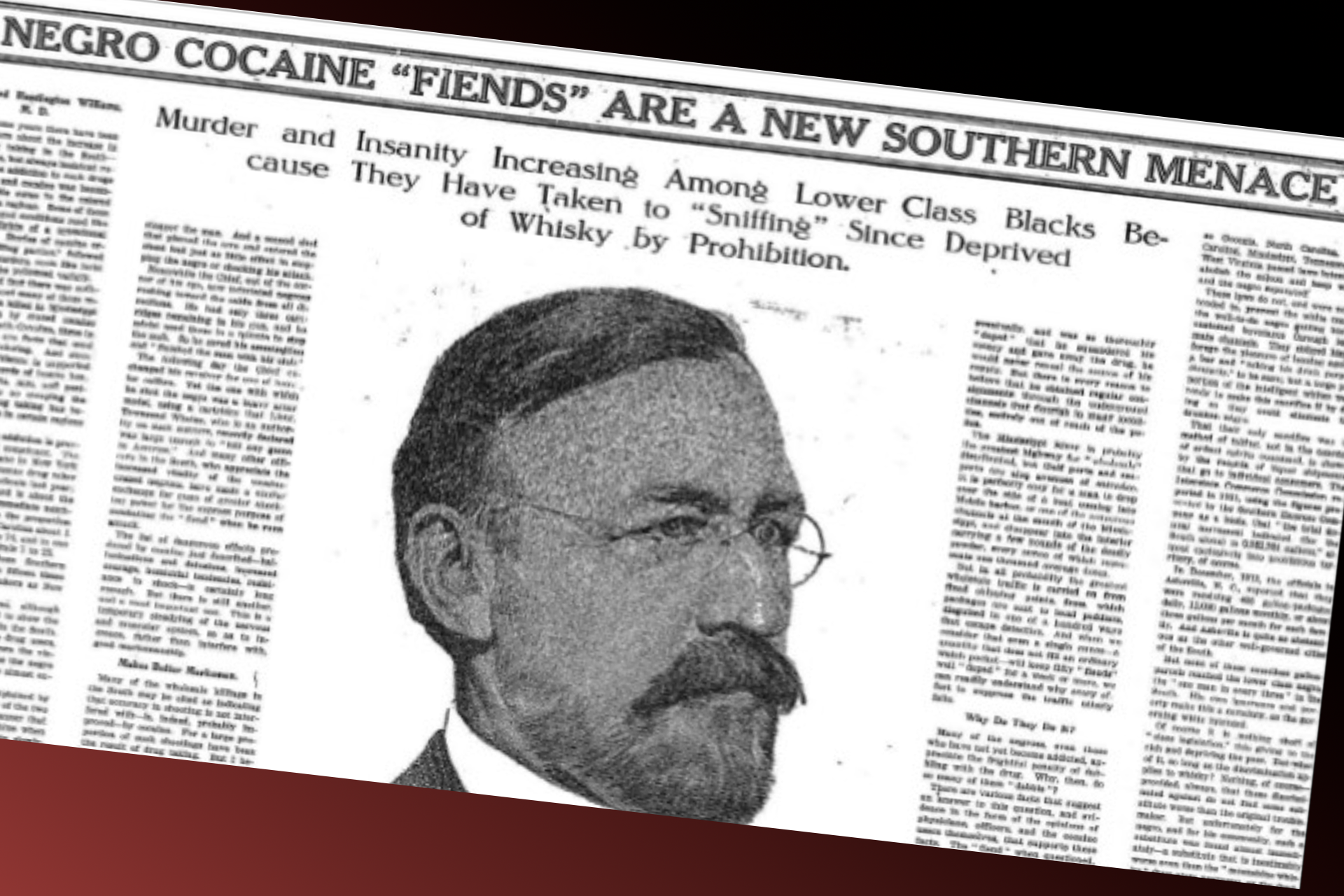
As mentioned in my analysis of local media coverage on drugs for The Objective, "Experts say the current media ecosystem has shifted away from the days of the New York Times’ infamous 'Negro Cocaine ‘Fiends’ Are a Southern Menace' article from 1914. But, they add, for some, the media has simply couched its drug-war rhetoric in euphemisms while parroting police talking points."
The New York Times article is perhaps the best-known piece of racist, anti-drug propaganda in U.S. history. It offers a ludicrous narrative about Black men who are crazed and immune to bullets because of cocaine, a drug that proliferated following the prohibition of alcohol.
The author also speaks of "stories of cocaine orgies and 'sniffing parties' followed by wholesale murders." White women would face the brunt of violence, both sexual and deadly, according to journalists, police and politicians at the time.
Ironically, that story did seem to get one thing right: The Iron Law of Prohibition. Outlaw a drug or ramp up enforcement, and a more lethal and unpredictable supply will follow.
This type of coverage has severe implications. It impacts public policy, public health and the public perception of those who use drugs, with the result often detrimental to those most affected — those who use drugs.
But more than a century later, journalism in Baltimore and beyond still speaks of drug-induced chaos among the Black population. It's just worded more carefully.
After the July overdose event, FOX45, whose owner bought The Baltimore Sun last year, cited anonymous police sources and community members in its baseless claims that a new drug called “New Jack City," which allegedly contained antifreeze, was responsible for the chaotic event. That reporting was the result of white-led media organizations parachuting into the area to cover an incident in a Black community they had long ignored.
Now, after months of reflection, The Sun provides an account of a reporter facing a terrifying threat: A Black man who may or may not be on drugs "invaded this reporter’s personal space as his eyes twitched rapidly."
The crazed Black man, striking a strong resemblance to the individuals whom The New York Times had depicted in 1914, strikes again.
Yet contrary to what the media has fed the public, the insanity of these events is not found within the mind of an intoxicated Black man.
The true insanity is that the post-industrial city has failed to redress the destruction caused by forced segregation, redlining, job loss and a notoriously brutal and racist police force, all of which have left the residents of Penn North and other areas with such poor material conditions and prospects for upward mobility that they have been left to rot.
Politicians are treating these issues as if they are part of a distant past, offering only lip service or piecemeal reforms as the police crack down and perpetuate the lethal cycle of the drug war.
Simultaneously, the madness is compounded by the fact that the media industry has taken advantage of those residents, sensationalizing mass overdoses and holding onto those headlines for dear life in the pursuit of clicks.
To hell with the policies that got us here and why their impacts fester; providing that context would take too much work and expose the rotten core around which white institutions are cloaked.
The "drug problem" is a vehicle through which racialized social control is achieved. Inaction among public officials is the vehicle through which the root causes of the overdose crisis are allowed to fester. And the media industry is often a vehicle through which all of this is normalized.
None of this is new; it's all part of the more than century-long drug war playbook. The residents of Penn North — and drug users throughout Baltimore — deserve infinitely better.

Read the last Redux Newsletter: "Ivan Bates, a drama-loving drug warrior, must be primaried from the left in 2026"
When State's Attorney Ivan Bates took office nearly three years ago, he inherited a historic opportunity. Drug-related arrests had plummeted over the past decade, making it seem as though the War on Drugs in Baltimore was losing steam.
Then, in a move that foreshadowed much of his tenure, he fumbled it. Bates scrapped his predecessor's de facto decriminalization policy, cementing himself as Baltimore's top drug warrior and emboldening the city's notoriously corrupt police force to crack down harder. In his first year in office alone, total drug arrests resulting in charges increased by 91%. Misdemeanor drug charges, which were the subject of the de facto decriminalization policy, increased nearly 20-fold.
Much to the delight of cops and prisons, the numbers have continued to rise since, and more than 90% of those arrested are Black.
Read the full newsletter here.
Mobtown Redux's Overdose Data has been updated with the latest local, state and national data
There were 777 overdose deaths in Baltimore in 2024, a 25.5% decrease from the year prior, according to preliminary data.
In the 12-month period ending in October, Baltimore saw 560 deaths, a death rate of 95.2 per 100,000 people. Statewide, there were 1,290 deaths, a death rate of 20.9 per 100,000 people.
The data shows that fatal overdoses continue to trend downward after years of climbing, though poor Black neighborhoods in West Baltimore continue to suffer the most.
Check out Mobtown Redux's Overdose Data Dashboard here.
Click here to learn more about harm reduction resources in the Baltimore area.
Filter: "Drug Policy Reform Movement Renews Fight Against Authoritarianism"
Despite the cold, the Drug Policy Alliance’s biennial Reform conference vibrated with excitement as approximately 1,800 people filed into the Detroit venue November 12. The majority—70 percent—were attending for the first time, with 15 percent from the city itself and many from countries around the world, all eager to engage and strategize on how to end the drug war.
The local activists, community members and grassroots organizations that pushed for the international event to come to Detroit would see it as a reflection of their city: full of grit, resilience and fight.
Click here to read the full article.

Comments