


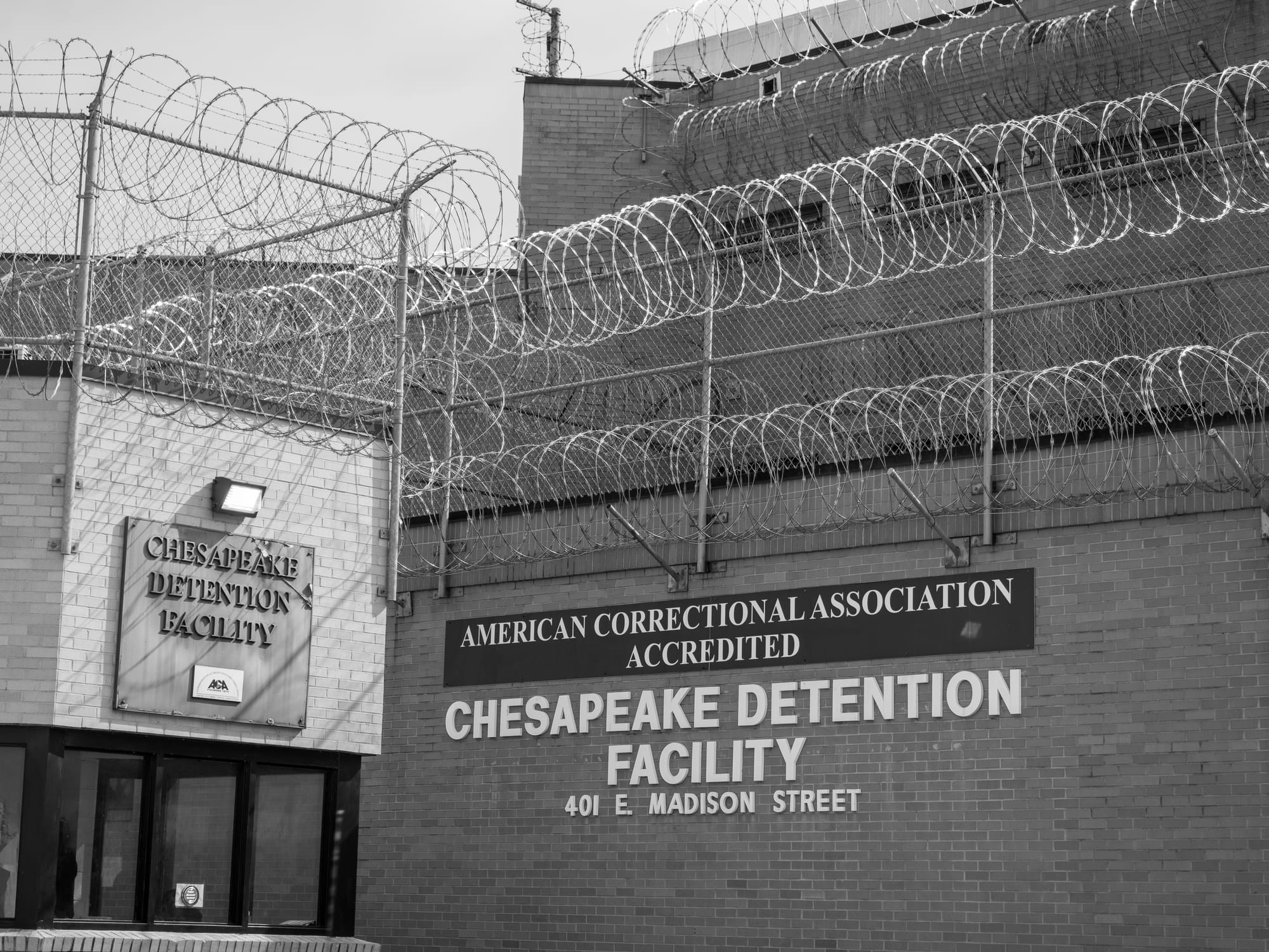
Baltimore's new mass overdose protocol begins with a promise: The War on Drugs is over in Baltimore, and the racist beast of punitive drug policy is no longer running the show.
Mayor Brandon Scott made the case before the Maryland Senate Finance Committee last week. With city health officials by his side, he emphasized the need for compassion and prompt action as he reflected on a string of three mass overdose events in Baltimore's Penn North neighborhood last year. Though none of the dozens of people who overdosed died because of prompt action from harm reductionists, the incidents rocked the low-income Black community and prompted a flurry of racist propaganda that harkened back to the New York Times’ infamous 1914 article, “Negro Cocaine ‘Fiends’ Are a Southern Menace,” which ultimately led to one of the first racist drug laws in the US.
Things have changed since then, officials argue. And care, not handcuffs, is at the center of the city's overdose prevention plan, officials say.
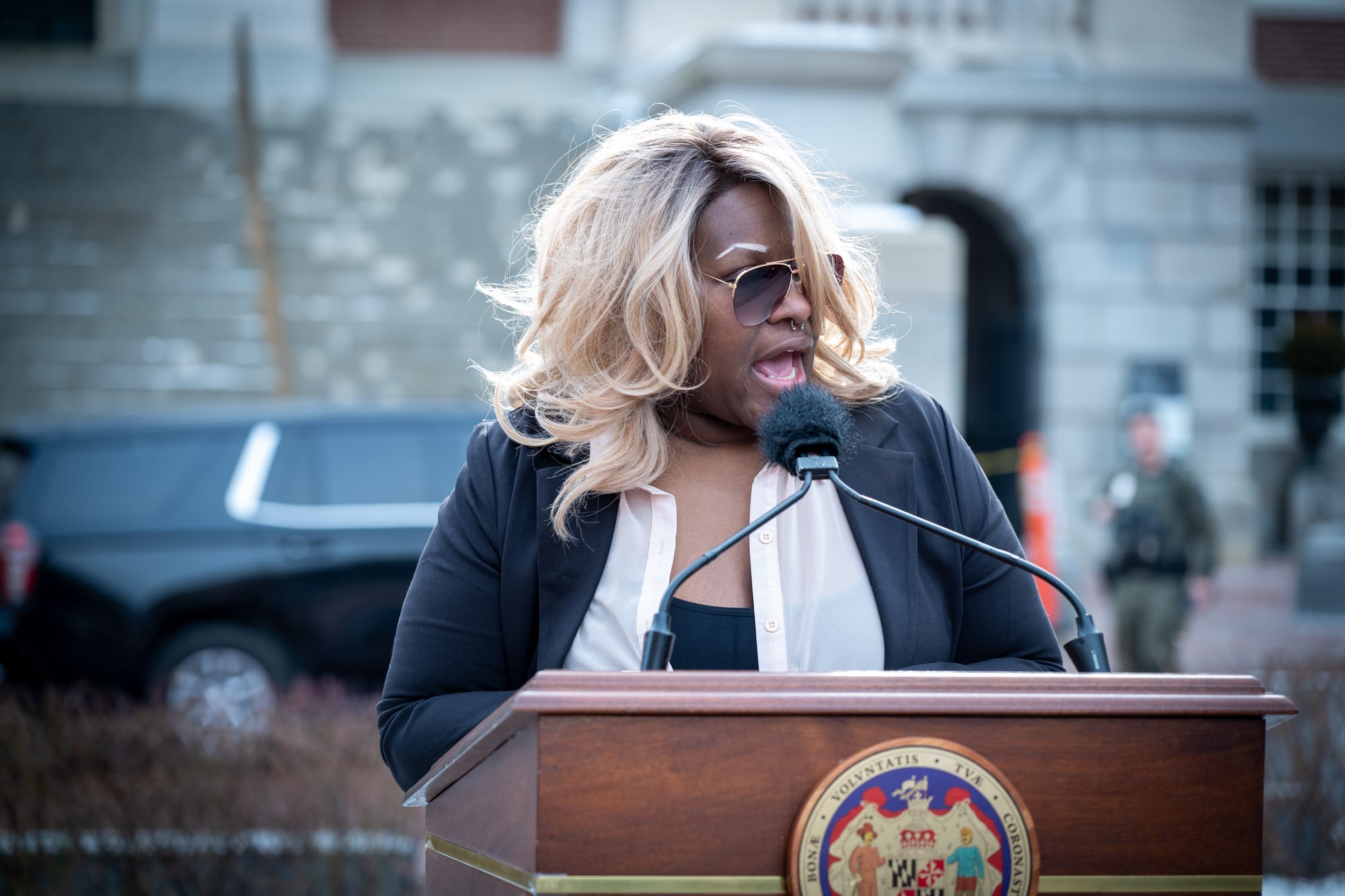
"For far too long, as was the case for public safety, city government operated as though we could arrest and criminalize our way out of this issue," Scott said at the hearing. "When I took office, we committed to doing things differently."
In practice, however, that has not been the case. As the prospects of drug user liberation in Baltimore remain grim, the drug war continues to rage on. And that death campaign is the reason the protocol must exist in the first place.
At first glance, the city's mass overdose protocol mostly clarifies language as to what a mass overdose is and codifies the roles of first responders. The document defines a mass overdose as "at least 5 overdoses in a 1-3-hour period in a defined/small geographic area or single location."
 Logan Hullinger
The plan, which officials first presented before the Baltimore City Council last month, is partially activated in the event of five to 10 overdoses. Full activation occurs during incidents in which 11 or more people have overdosed.
Partial activation entails the fire department taking the lead, and the city would establish on-scene sites to coordinate a response. Local harm reduction programs would then provide support and conduct community canvassing.
Upon full activation, however, the scene is treated as a mass casualty event. It is at that time that police take over along with the health department. The city would utilize its emergency operations center to coordinate a more thorough, widespread response.
Police and health officials did not respond to requests for more details about the police's role by Mobtown Redux’s deadline. Yet any involvement by law enforcement is where any chance of a public health-driven response goes to die.
The Baltimore Police Department's own data directly contradicts the anti-carceral sentiment of public officials, who have done little more than pay lip service to the ruinous consequences of drug-war policing while avoiding actual reforms.
The police department ended 2025 with a 25% increase in misdemeanor drug arrests over the year prior, according to the data. And, although the most recent data only reflects the month of January, those low-level arrests have risen by an additional 18% from the same time period last year.
At a Baltimore City Council Public Safety Committee hearing last week, Police Commissioner Richard Worley claimed that drug users weren't the targets as they seek to dismantle "open-air drug markets" such as Penn North.
"It's really hard to close down open-air drug markets because you don't really want to get the buyer," he said. "That doesn't really do anything. You've got to get the seller."
Yet Worley contradicted a statement he made just months before as he stood in front of the same committee, claiming that "there's no way around" arresting drug users because they must be cuffed and flipped to get their hands on those who sell drugs.
All the while, studies show that this exact brand of drug enforcement can increase overdose death rates by disrupting the drug supply and pushing drug users toward riskier sources, a phenomenon known as the “Iron Law of Prohibition.”
 Logan Hullinger
Baltimore is no stranger to the tainted drug supply. In the first mass overdose event in July — after which cops raided the neighborhood and arrested five people — a rare designer benzodiazepine was found in the drug supply. In the most recent incident in October, the veterinary sedative medetomidine was found.
It's abundantly clear that the current status quo is not working. So, where does drug policy reform now stand?
"The decriminalization of paraphernalia, to just reduce barriers to individuals who are experiencing substance use disorder treatment, is also very important," said Letitia Dzirasa, the city's Deputy Mayor of Equity, Health, and Human Services, at last week's hearing.
"So is the sustained investment in our Rapid Analysis of Drugs program. And then lastly, of course, people who use drugs have safe places to go for those ongoing supports, places where they won't be judged, and that are stigma-free."
Policies such as decriminalization, an iteration of which is now a bill introduced in the General Assembly, are undoubtedly a step in the right direction. At a Maryland Senate Judicial Proceedings Committee hearing last week, advocates unveiled a bill that would completely repeal state laws criminalizing paraphernalia.
But paraphernalia legislation is just one of many reforms required to end the carceral state's grasp on drug policy, one of the most vital of which is the legalization of overdose prevention centers.
Those facilities, as Dzirasa described, would give drug users a safe place to consume substances under medical supervision. They'd also connect these individuals to other social services.


The Redux Newsletter is now co-published by Scalawag Magazine, an abolitionist publication covering oppressed communities in the South. Support them today.
Unlike previous years, however, advocates aren't pursuing bills in this General Assembly to legalize OPCs in this session, and the mayor has refused to commit to establishing city-sanctioned sites despite multiple avenues to pursue them. Health Commissioner Dr. Michelle Taylor has more candidly indicated that the city won't pursue OPCs to avoid risking federal funding under President Donald Trump.
The city may be riding the high of its second consecutive historic drop in fatal overdoses, but that's part of a national trend. And the crisis continues to disproportionately impact low-income Black communities. Older Black men are particularly at risk, with their death rates more than doubling those of white men in recent years.
The city's recent focus on the mass overdose protocol will not address any of this; the plan simply creates a formal response to a problem that's inextricably linked to Baltimore's policy failures. It won't stabilize the increasingly lethal drug supply, and it sure as hell won't shift the city toward a more compassionate approach to drug use as long as the police prioritize crackdowns with their whopping $613 million war chest.
The words of those in power mean little, given how the city has positioned itself against drug user liberation. Instead, they've bankrolled a system that forces drug users into the shadows, jail cells, or graves.
The War on Drugs is alive and well in Baltimore; the same can't be said for the thousands of city residents who have died at its hands in the past decade.
If the city truly wants to save lives, it's incumbent on those who wield power to listen to the demands of drug users and harm reductionists. Yet that takes a level of political will that's absent in Baltimore, so perhaps the people must take things into their own hands.

Read the last Redux Newsletter: "A frigid Baltimore storm highlights the cold shoulder those in power have given to vulnerable residents"
At first glance, Baltimore entered 2026 on a winning streak. The city saw its historic decline in violent crime continue, and fatal overdoses plummeted once again to a 10-year low.
Yet the data was soon met with a hefty dose of reality. A bone-chilling cold snap gave way to a debilitating and dangerous winter storm, blanketing the city with snow and cooling the sense of burning optimism projected by those who hold power. For the most vulnerable residents and those who fight for their livelihoods, the progress boasted in press releases and social media posts didn't jibe with what drug users and unhoused neighbors are actually experiencing in the streets.
The storm and the sub-zero windchills that lingered demonstrated that the pictures of progress painted by those in power have been weaponized to retain power at the expense of those who have none.
Read the full newsletter here.
Mobtown Redux's Overdose Data has been updated with the latest local, state and national data
There were 568 overdose deaths in Baltimore in 2025, marking a historic 27% decrease from the year prior, according to preliminary data from the Maryland Department of Health.
That death toll will likely change as causes of death are finalized, but the decline mirrors the downward trend seen nationally. This was the second consecutive year that Baltimore saw a notable decrease in deaths; there were 777 deaths — a 25.5% decrease from the year prior — in 2024.
The numbers indicate that the city's fatal overdose rate continues to trend downward after years of climbing, with the death toll twice surpassing 1,000 people.
However, the preliminary data also shows that low-income Black neighborhoods in West Baltimore continue to see the highest death rates. Those same neighborhoods are also the most heavily policed, with residents significantly more likely to be arrested on drug charges,
Check out Mobtown Redux's Overdose Data Dashboard here.
Click here to learn more about harm reduction resources in the Baltimore area.
Filter: "HHS Unveils “STREETS” Initiative, Ramping Up Coerced Drug Treatment"
At a sumptuous resort just outside Washington, DC, on February 2 for “Prevention Day,” Health and Human Services Secretary Robert F. Kennedy Jr. announced his Safety Through Recovery, Engagement and Evidence-based Treatment and Supports (STREETS) Initiative. He opened by scapegoating people who use drugs as “negative producers” and “drags on the whole [health care] system.”
STREETS is billed as a $100-million investment to “solve long-standing homelessness issues, fight opioid addiction and improve public safety by expanding treatment.” It will be piloted in eight as-yet-unspecified cities, and is designed to operate in tandem with “assisted outpatient treatment” (AOT)—court-ordered psychiatric probation, similar to probation for drug violations. AOT saddles participants with the ever-present threat of being involuntarily committed to a psychiatric facility for noncompliance, or even just a technical violation. HHS will soon offer $10 million in AOT grants (though this amount has been higher in previous years).
Click here to read the full article.

Comments