


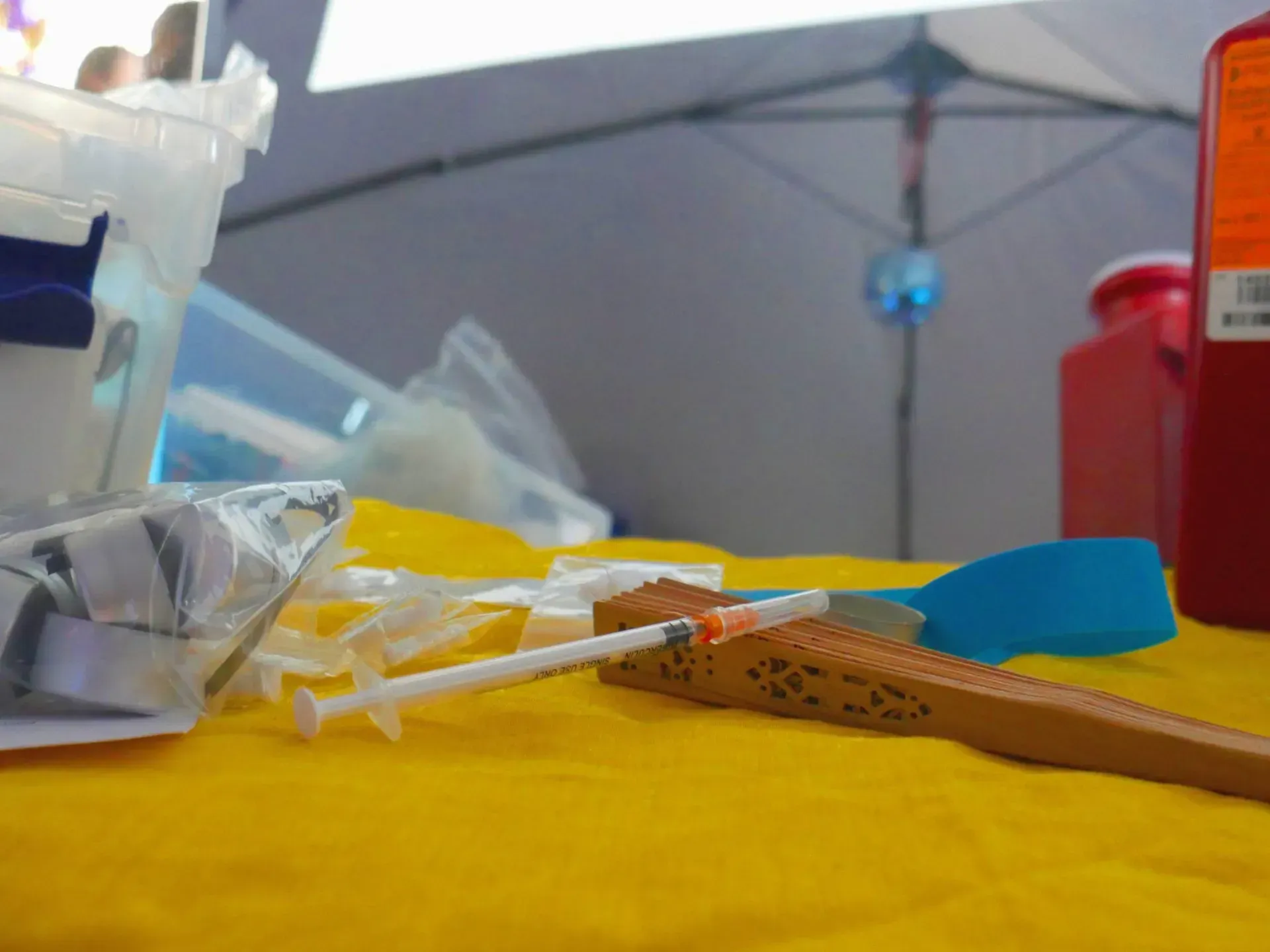
Harm reduction workers on the frontlines of the overdose crisis have gone more than six months without a statewide training program that’s been essential for a workforce already in the federal government’s crosshairs.
HealthHIV, a national nonprofit based in Washington, D.C., opened registration for the new curriculum on December 12, but classes won't start until January 20. State officials and HealthHIV had previously said it would begin this fall.
The training, which provides education on syringe service programs, best practices on providing compassionate care for drug users, and official certifications for those working to save the lives their lives, was abruptly halted last summer, handicapping local organizations’ abilities to bring on more harm reduction workers — something that has become imperative amid President Donald Trump’s crackdown on compassionate care for drug users and astronomically high fatal overdose rates.
The new curriculum, called the Opioid Associated Disease Prevention and Outreach Programs Academy, will include self-paced courses that cover topics such as outreach and de-escalation; motivational interviewing; wound care; drug information and drug checking; and overdose prevention and response, said Brian Hujdich, executive director of HealthHIV.
Advanced-level courses will also be offered, and HealthHIV plans to launch a podcast highlighting the stories of frontline workers and those who use drugs.
“HealthHIV has a deep understanding of Maryland’s harm reduction community and workforce, informed by our direct local service over many years and through various state-wide programs throughout Maryland,” Hujdich said.
“We are focused on building a more educated, skilled, and responsive workforce dedicated to reducing harm throughout Maryland, using our proven ability to strengthen a culturally competent workforce equipped to meet the diverse needs of Marylanders. We intentionally design our programs with input from the community and choose faculty, instructional strategies, and resources that reflect the most current, relevant, and evidence-informed practices.”
But despite the details of the new training coming to light, HealthHIV’s takeover has not gone without pushback from local organizations.
In a recording of a November 19 call obtained by the Baltimore Beat that included HealthHIV, state health department officials, and local organizations, leaders in the harm reduction field peppered the organization with questions about the qualifications of trainers, the lack of in-person training and the delay in the program’s implementation.
"We've hired people. We've been waiting months for it. We're expecting now to wait until January for that to come out?” said the director of one harm reduction organization.

HealthHIV noted that the rollout faced challenges because of ever-changing federal guidance under Trump, whose administration has targeted harm reduction programs and limited what services can receive federal dollars. The organization said they also needed to tailor its programming to the unique needs of Maryland.
Still, it seemed to do little to assuage the concerns of those on the call who had become accustomed to the previous organization leading the program.
“We depended on those trainers that were experts in what we do, these direct services that are lifesaving in our state and our communities,” the director who questioned the timeline of the rollout added.
The lapse in statewide harm reduction training dates back to June, when the Maryland Harm Reduction Training Institute, an arm of Behavioral Health System Baltimore, was notified that the state health department did not choose the organization to continue running the program. The institute ceased all training less than two weeks later, and there has been no comprehensive statewide training since.
The program, which had overseen training for six years, had exploded in popularity as those who use drugs in Maryland died at astronomical rates. Under BHSB, more than 8,500 people received training in 22,000 sessions, with enrollment in courses growing by 1092% between 2021 and 2024, according to the organization.
Public health experts and drug policy reform advocates have at least partly attributed a recent decline in overdose deaths to harm reduction initiatives. There were 777 overdose deaths in Baltimore in 2024, a historic 25.5% decrease from the year prior, according to preliminary data from the state health department. The death rate continued to decline in 2025, though an annual death toll is not yet available.
“One thing that's unique about Maryland's infrastructure is how connected all of the programs have been. And it was largely because [the Maryland Harm Reduction Training Institute] and our trainers were local – they were from Maryland,” said Zach Kosinski, harm reduction director at BHSB.
“Many had worked in Maryland at Maryland programs, had personal relationships with folks, and really were part of that backbone tying everything together. And then we worked hand in hand with the state. I think it's absolutely critical that we have something like that right now in a time when resources are beginning to dwindle, been funding cuts.”
State health officials and HealthHIV have countered that point by noting that it’s not a stranger to Maryland. In a statement, the department told the Beat it is “confident that HealthHIV has the experience and capacity needed to continue to be an effective partner in this work, and will continue to seek opportunities for input on the development and curation of content.”
The nonprofit led the state’s Alive! Maryland program supporting the local public health workforce with harm reduction-focused training and technical assistance, which began in 2021 and ended in 2023. In 2023 and 2024, it led the state’s TEACH CHW program, which provided harm reduction training to local community health workers.
Even so, HealthHIV officials have admitted these may be difficult times for local harm reduction organizations that were accustomed to the previous training programming.
“We absolutely know and feel everything that you're sharing and understand that change is incredibly difficult,” said Melissa Kelley, training director at HealthHIV, during the November 19 call.
“Everything is changing right now. Everything from the top down. So, it's hard to manage because everyone has expectations. And as you said, you had a really great program before. And the unknown, you don't know what the new one's going to look like. But I assure you that not only will you be in great hands, but we are available and we want your feedback.”

Comments